
About Chatham Maritime Trust (CMT)
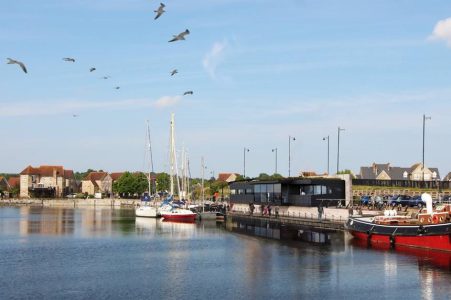
Chatham Maritime is the area formerly known as the Naval Dockyard. The land was divided into three areas, now the Chatham Historic Dockyard, Chatham Docks (including what will be Chatham Waters), and the remaining 350 acres which is the Chatham Maritime Estate, now a varied development of homes, office, leisure and universities on St. Mary’s Island and south of the Victorian dock basins.
CMT is a Charity (registered charity number 1055710) created in 1997 by English Partnerships to take on responsibility for the long-term management and maintenance of the regeneration of the majority of the former Dockyard. CMT is the body to which the Homes & Communities Agency (HCA) transfers land as the development comes towards an end.
CMT is working to make Chatham Maritime a great place to live, work, study and play.
We focus on ensuring that the areas for which we are responsible for are well maintained, and that best use is made of our historic assets. We lead in maximising the on-going successful regeneration of Chatham Maritime.
We aim to deliver services that give value for money, while engaging fully with our communities and ensuring all the while that the Trust is financially sustainable.
Chatham Maritime Trust was, at its inception, gifted a substantial endowment (Dowry) to deal with future maintenance of some of the major infrastructure.
We receive revenue funding from:
- St. Mary’s Island (SMI) rentcharge
- Homes and Communities Agency (HCA) top-up grant
- Commercial area and University campus service charges (South of the Basins)
- Dowry interest
CMT is charged with looking after Chatham Maritime for 150 years. Expenditure on the estate has to be proportionate to income: therefore all maintenance and improvements on the estate are conducted within the Trust’s financial constraints.
The Rentcharge
When you purchased a property on St. Mary’s Island you signed a Deed of Covenant agreeing to pay the rentcharge to CMT.
The obligations of the Rentcharge Owner are detailed in the Deed of Covenant which details what structures, facilities and amenities it is obliged to maintain.
The rentcharge income is a contribution to the overall costs of the maintenance of St. Mary’s Island and all the rentcharge income is spent on maintenance of those parts of the Island that fall to the Trust to maintain.
The rentcharge expenditure is allocated to:
- East, Central East & Central West Bunds
- Semi-circular grassed areas either side of the HMS Chatham bridge
- HMS Chatham Bridge
- Water Safety
- PCSO
- CCTV monitoring around the Island
The good management of these areas and facilities maintains and adds to the value of the residential development and its environment. Freehold properties pay their rentcharge directly to CMT and lessees generally pay their rentcharge as part of their maintenance charges collected by their managing agents.
The range of maintenance and services currently goes beyond the strict legal obligations which the Trust has under its covenants towards residents. The additional maintenance and services are provided subject to availability of funding.
The rentcharge does NOT cover the management or maintenance of:
- Public highways, paths and road signage (Medway Council and Developers)
- Roadside landscaped verges that were adopted directly from the Developers
- Street Lighting (Medway Council and Developers)
- Utilities
- Grassed areas or parking spaces around houses or blocks of flats (These are the responsibility of individual homeowners or of the blocks’ management companies)
- Parking (Medway Council and Developers)
These are the responsibility of the various house builders pending adoption by the local authority.
St Mary’s Island Community Centre is self-funding and is not paid for with rentcharge funds.
The formula for calculating the rentcharge is detailed in the Rentcharge Deed and changes in line with the Retail Price Index. The rentcharge consists of a fixed element of £1 per annum and a variable element based on the number of bedrooms in the property. The variable element changes annually in line with the Retail Price Index. This mode of charging is not discretionary; it is ensconced in each property’s legal document (title deeds). A breakdown of how the rent charge is calculated is included in the annual rent charge pack issued in March each year.
Yes. At present CMT is able to offer a direct debit facility by completing a Direct Debit Instruction Form. This accompanies the rentcharge invoices which are usually issued in mid-March for payment effective 1 April. Alternatively, the rentcharge can be settled in one of four ways:
(a) online banking
(b) cheque
(c) cash
(d) Debit/Credit Card (credit card payments are subject to a nominal fee)
(e) In person at the CMT office or over the phone with our Accounts department
A ‘How To Pay Your Rentcharge’ information sheet also accompanies the rentcharge invoices.
CMT does not give refunds against rentcharge payments. If a property is sold during the course of the year, it is for the vendor to liaise with the purchasers’ solicitors to seek reimbursement for an apportionment of the rentcharge. Statements of rentcharge accounts can be obtained from CMT.
By signing the Deed of Covenant to any property on St. Mary’s Island the purchaser is legally agreeing to pay under the terms of the Transfer. If the debt remains unpaid after 21 days of becoming payable, then the Rentcharge Owner can apply interest to the debt and a late payment fee. Continued non-payment will result in the purchaser’s debt being referred to solicitors and you will be responsible for paying the solicitor’s recovery fees. Failure to clear this debt is likely to affect the eventual sale or re-mortgage of your property.
Yes, all properties on St. Mary’s Island are subject to a rentcharge. For freehold properties, i.e. houses, the owner is invoiced directly for the rentcharge. In the case of blocks of flats, it is the block owner that is invoiced, and they have a liability to pay the rentcharge to the Trust and the block owner normally recovers the charge from the flat owner.
Individual flat leases are contracts between the block freeholder and the individual lessees. If you have a query on the rentcharge that has been billed to you then you need to take this up with the organisation that has invoiced you. CMT has no right to intervene in those aforementioned contractual arrangements.
Island rentcharges do not cover the maintenance of blocks of flats or their grounds – these are funded by service charges paid to the block landlord.
Landscaping
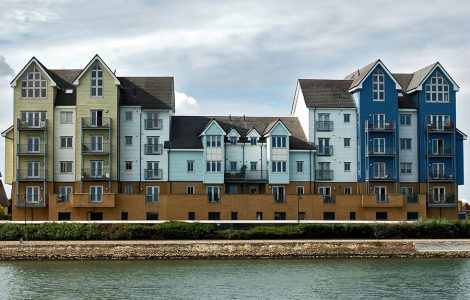
There are many parties involved in land ownership across the 350-acre estate, i.e. CMT, Medway Council, Homes England, Developers, Businesses, Leaseholders, and homeowners. CMT can distinguish who owns the landscaping and will engage with the landowner to ensure the area is maintained.
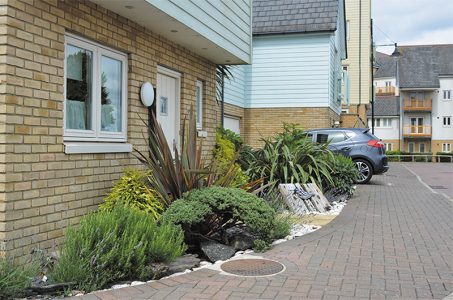
It may also be that land adjacent to your property is in your ownership and you are, therefore, responsible for the good maintenance of the landscaping thereon. Your upkeep of these areas is also very much in the interests of all residents in keeping the ‘Street Scene’ which all residents buy into and as such is part of the restrictive covenants you signed up to when you bought your property.
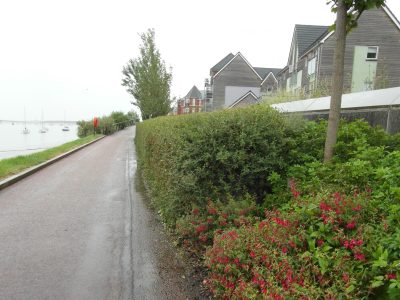
CMT currently maintains landscaping on most of Riverside Walk, Finsborough Down, the two central parks, three play areas, the Crescents, and the Community Centre complex. The Trust does not currently maintain the roadside landscaping, which is presently the responsibility of the relevant developer but is in discussions to take on this responsibility in the future.
*insert a map of the Estate* – CMT Operations team to work on this*
CMT will only maintain the hedges that we own or are paid to maintain by a third party. The hedges on the side of paths are often owned by residents, who are responsible for maintaining their own landscaping. CMT will speak to homeowners to cut their hedges back where necessary.
No, if you are unable to undertake this work yourself, we suggest you contact a local landscape company, window cleaning company or property management company. We may be able to suggest some options for this if that would be helpful. Please do remember though that this maintenance does form part of the Covenants you have signed up to. There are some exceptions on the Island, and you can always ask us to confirm this from the title deeds.
St Mary’s Island underwent an extensive ‘clean-up’ exercise and any contaminated soil was removed to a landfill site before any properties were built. The soil in the gardens on St Mary’s Island is perfectly safe for growing fruit and vegetables.
Although under no obligation to do so, CMT, has provided 84 dustbins located at various points throughout the Estate together with a dog run; we also pay to have the dog bins regularly emptied and the dog waste bags stocked up. SMI also has numerous signs to deter irresponsible dog walkers. Only the Medway Community Safety Officer can issue penalty notices for dog fouling offences. A Fixed Penalty Notice (FPN) can be issued but they must personally witness the incident; they can also issue the same for offences of cycling on footpaths and littering. If offenders are witnessed by the Estate Team or on CCTV they are asked to return and remove their dog’s mess. Please feel free to report any such issues on .
Road Adoption
Any queries regarding council tax should be directed to Medway Council on 01634 306000.
The ring road of Island Ways East and West has been adopted by Medway Council; you should contact them directly with any queries regarding street lights and road maintenance in this area.
With the exception of the parks and Riverside Walk , all remaining roads and footpaths are either owned by Medway Council or Vistry (developer). Pre adoption discussions are currently taking place to enable the remaining unadopted roads and footpaths to be transferred to Medway Council in due course. Any comments or complaints regarding footpaths, streetlights or roads on St Mary’s Island should be directed to the Council or Vistry, if you are unsure who owns them we would be able to advise who owns them.
Security and Land Management
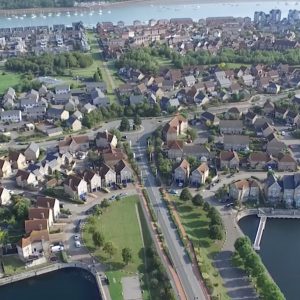
CMT uses a security contractor; in the main by our land is reviewed with 24-hour CCTV surveillance. The team also check safety equipment, our play areas, parks and infrastructure. They are also responsible for overseeing health and safety, auditing covenant breaches, helping to manage the Trust’s other contractors on site, and report maintenance or repair issues across the estate. Residents on St Mary’s Island have benefitted from this, in particular by having a low crime rate compared to other parts of Medway.
We should point out, however, that this service does not extend to cover individual properties on SMI. The trust also fully funds a PCSO who works closely with the management team to identify and prevent crime on the estate.
During the periods when we are aware of higher levels of anti-social behaviour the Trust has a security officer patrolling the Island, this can include summer holidays, firework night, Halloween, New Years and other events where we know incidents have occurred in the past.
To the police, the Trust’s Security and Estate Management team are simply third parties. The team will report an incident to the police if they have witnessed it and if they believe a police response is required but unless they witness the event, the police consider such reports to be ‘hearsay’ and are unlikely to act. If a resident witnesses an incident or criminal activity, they must report it to the police directly, either on 999 for emergencies or 101 for less serious incidents.
CMT has no ownership or involvement with the roads on St Mary’s Island and no right to action parking complaints. Only when the roads are transferred to Medway Council and adopted as public highway will Medway Council, via bye-laws and traffic regulation orders (TROs), and the police have the authority to enforce parking restrictions. The same applies to dealing with speeding across St. Mary’s Island.
Restrictive Covenants
All owners and social landlords sign up to the Restrictive Covenants when they purchase their properties. It is the owner’s responsibility to ensure that every occupant of their property complies with the Restrictive Covenants to the benefit of all residents. We should point out that when purchasing your property, you will have signed up to a number of Restrictive Covenants which the Trust is charged with enforcing. One of these covenants requires both owners and lessees to maintain their front gardens to a reasonable standard such as to maintain the ‘Street Scene’ for the benefit of all residents. Social landlords also sign up to these Restrictive Covenants.
The Trust is charged with enforcing the Restrictive Covenants and Estate Regulations.
The Trust cannot get involved in neighbourly or boundary disputes.
An application has to be made to the Trust in writing providing details (with photographs) of the existing features and what they are to be replaced with. The application should be sent with payment for minor alterations (view fees) and sent to the Trust. Providing the features are to be replaced on a like-for-like basis the Trust can issue the consent certificate which should be retained with the deeds of the property.
This also applies to any other alterations you wish to make to the property.
A copy of the Trust’s Restrictive Covenant Policy is available on our website.
Please remember that if you do not get permission before you do any works subject to the Covenants, you will be in Breach. This will mean that you are responsible for all charges relating to resolving the breach; you will also not be able to re-mortgage or sell your property when in Breach.
The permitted development has been removed from St. Mary’s Island and as such many alterations and new structures (including paving) require planning permission from Medway Council.
A Certificate of Compliance is required to complete the sale of your property and to confirm to the buyer that the rent charge has been paid in full and that there are no breaches to the restrictive covenants at the date of sale or re-mortgaging the property.
Charges for the issue of Certificates of Compliance were introduced in 2006/2007 as administration workload increased, and additional staff had to be employed. This is common for such documentation; solicitors charge for the issue of any document.

Miscellaneous
The Trust is the long-term guardian of Chatham Maritime. We have continuing obligations to maintain the environment including a responsibility to safeguard what has been achieved and to facilitate the continued development of Chatham Maritime.
The Trust cannot get involved in neighbourly or boundary disputes.
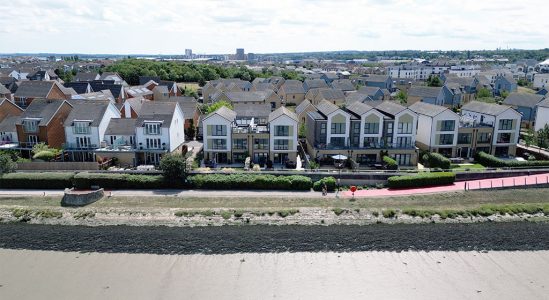
Flood Defences were first constructed around St. Mary’s Island circa 1858 and were raised in the 1960’s. The level of the flood defences were increased again in the early 1990’s prior to St. Mary’s Island being developed. The flood defence level now protects against a statistical 1 in 1000 year event. Information can be obtained from the Environment Agency.
For more information refer to Chatham Maritime Trust’s Flood Risk Report (June 2022)
Chatham Maritime Trust is not responsible for communicating issues about flood warnings; this is the role of the Environment Agency.
Keeping you informed
Chatham Maritime Trust keeping estate residents and businesses informed of what’s going on in a variety of ways:
NEWS
www.cmtrust.co.uk
For current updates on:
- Estate works
- Roadworks
- Events
- Meetings etc.
SMIRA
www.smira.info
St. Mary’s Island Residents’ Association keeping SMI residents up-to-date with the latest issues and meetings.
email:
NEWLETTER
The Maritime Messenger
BI-Annual newsletter with articles on activities across the Estate.
EMAIL NEWLETTER
The Friday Flyer
Weekly newsletter detailing events and activities for the upcoming week.
Subscribe today or
email
with your details.
If you wish to raise any complaints or report any faults please email them to info@cmtrust.co.uk